


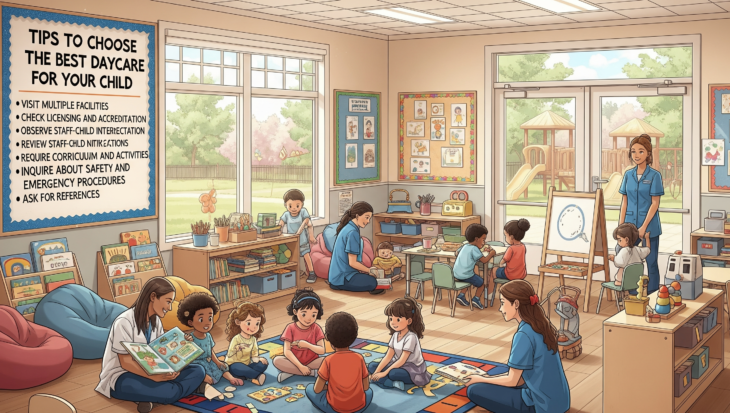
Choosing a daycare is both emotional and practical: you want a safe, nurturing place where your child will learn, play, and thrive while you work or study. This guide breaks the choice into ten manageable tips, each explained clearly so you can compare options and make confident decisions.
You’ll also find real questions parents search for, a printable checklist, and an easy summary of important childcare statistics to help you weigh costs, quality, and availability. Read on and bookmark this page for your daycare search.
1. Start Early and Know Demand in Your Area
Daycare openings are often limited, especially for infants and toddlers. Start your search as early as possible, as many high-quality centers and family providers fill months in advance, and waiting lists are common for popular programs.
Begin by mapping all centers within a practical commute, then call each one to ask about current availability, waitlist policies, and anticipated openings. Early research gives you the freedom to compare multiple options rather than settling for the first available spot.
2. Prioritize Safety and Cleanliness
Safety is the non-negotiable baseline. Look for secure entrances, childproofed spaces, visible emergency plans, and staff basic safety certifications, such as CPR and first aid. Inspect the playground equipment for hazards and check that toys and surfaces are clean and well-maintained.
Ask about health policies: how the center handles illnesses, medication administration, diapering procedures, handwashing routines, and cleaning schedules. A clean, organized facility usually reflects thoughtful management and lower risk for contagious illness.
3. Check Staff Qualifications and Turnover
Experienced, well-trained caregivers are the heart of good child care. Ask about staff-to-child ratios, lead teacher qualifications (degrees, certifications, or specialized early childhood training), and ongoing professional development practices.
High staff turnover can disrupt routines and relationships. Ask the director how long teachers typically stay, and how the center supports staff retention (competitive pay, training, supportive leadership). Low turnover is a strong signal of a healthy workplace, which benefits children.
4. Observe Daily Routines and Interactions
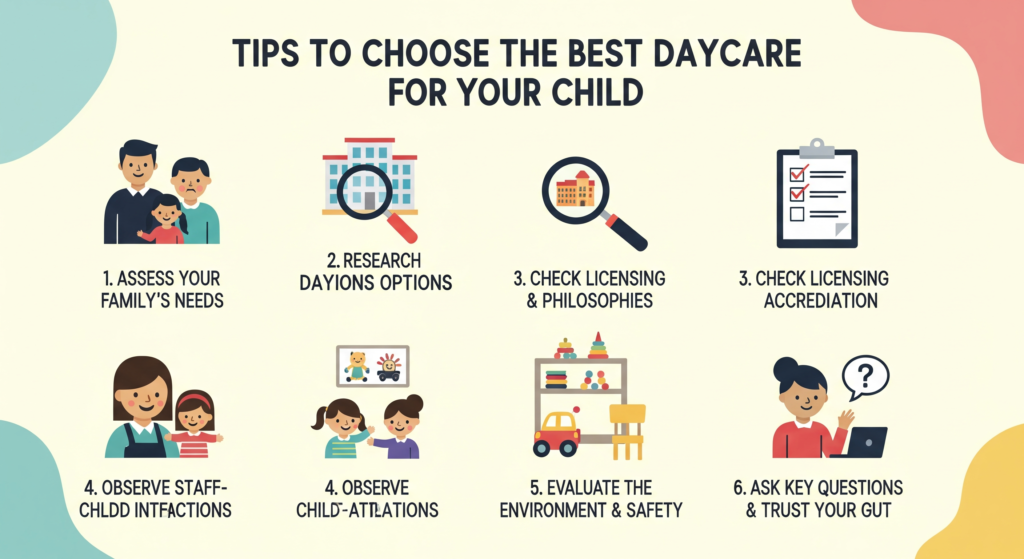
A great daycare has a predictable daily rhythm: arrival, free play, small-group learning, meals, naps, outdoor time, and pickup. When you tour a center, observe how caregivers interact with children are they warm, responsive, and engaged? Do children look calm and involved?
Watch transitions: smooth handoffs (greeting families at drop-off), consistent nap routines, and respectful redirection of behavior all show that staff understand child development and classroom management. Ask for a sample daily schedule for your child’s age group.
5. Curriculum and Learning Philosophy
Some daycares follow structured curricula (Montessori, Reggio Emilia, HighScope), while others emphasize play-based learning or emergent, child-led activities. Decide what approach resonates with your family values and your child’s temperament.
Ask how the center assesses progress (portfolios, observations, parent-teacher conferences) and whether they offer enrichment (music, language, movement). A clear philosophy and documented learning goals signal intentional teaching rather than passive babysitting.
6. Communication With Parents
Regular, honest communication builds trust. Good centers use daily reports, photos, apps, or face-to-face chats at drop-off/pickup. Ask how the center communicates about incidents, developmental milestones, and curriculum activities.
Find out about opportunities for parent involvement, such as open houses, volunteer days, parenting workshops, and parent-teacher conferences. Parent input is valuable; centers that welcome it tend to be more transparent and responsive.
7. Nutrition, Sleep, and Special Needs Policies
Food and rest shape children’s days. Confirm whether meals and snacks are provided or if you need to supply them. Ask about nutrition standards, allergy policies, and how staff accommodate dietary restrictions safely.
If your child has special needs, allergies, or a medical plan, ensure the daycare has protocols and trained staff to accommodate them. Ask whether they have experienced staff who have worked with children with similar needs and what the inclusion approach looks like.
8. Licensing, Accreditation, and Inspections
Check that the daycare is licensed by the appropriate local or state agency and ask about inspection records or compliance issues. Licensing ensures minimum health and safety standards; accreditation (e.g., NAEYC in the U.S.) goes further, indicating higher-quality practices.
Request the most recent inspection report and ask whether the center has ever lost accreditation or faced serious violations. A transparent center will provide this information without hesitation.
9. Cost, Contracts, and Flexibility
Understand the full cost: tuition, deposits, registration fees, late pickup fines, holiday closures, and supply or activity fees. Ask about refund policies and whether there are discounts for siblings, subsidies, or sliding-scale fees.
Clarify contract length, notice periods for leaving, and what happens if your child is sick or you need emergency care. Flexibility matters particularly if your work schedule changes, so ask how the center handles schedule adjustments.
10. Trust Your Gut and Your Child’s Response
After you’ve checked the facts, listen to your instincts. If something feels off, a tense atmosphere, rushed staff, or unclear policies, it’s okay to keep looking. Conversely, a warm welcome, clear communication, and visible joy from children are powerful positives.
Bring your child for a trial day if possible. Children often reveal what adults miss: a shy child who blooms in one classroom or a toddler who clings in another will give you clear data on fit beyond checklists.
How to Tour a Daycare: A Practical Script
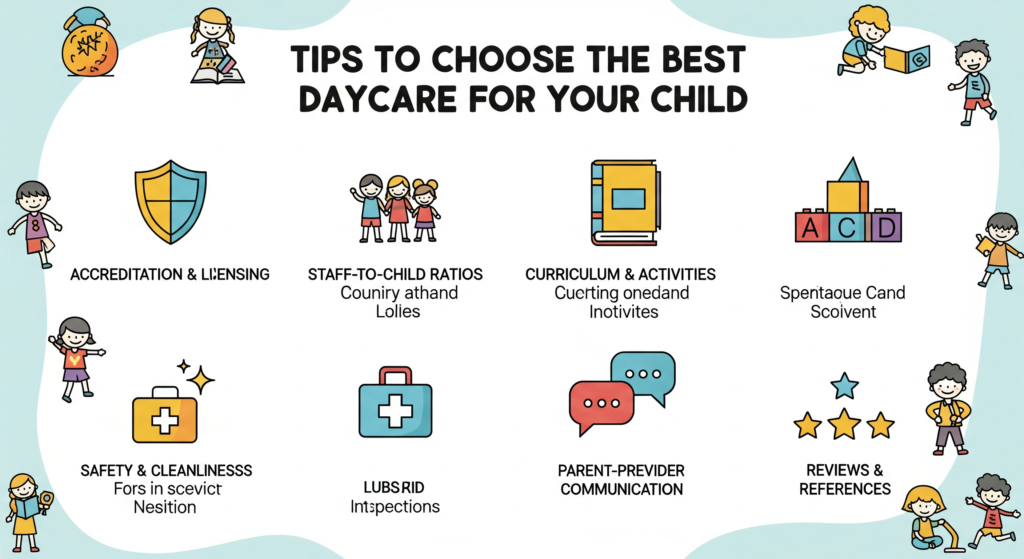
Prepare a list of must-ask questions and bring a notebook. Ask to observe a group for 10–15 minutes during an active part of the day, such as free play or outdoor time. Note how staff respond to misbehavior or conflict between kids.
Ask current families for references and follow up. If possible, visit at different times (morning drop-off and mid-day) to see both arrival and established routines. A single visit is useful, but a few snapshots across time give a fuller picture.
Printable Daycare-Choice Checklist
- Licensing and accreditation verified
- Staff-to-child ratio appropriate for age
- Lead staff credentials and turnover rate
- Cleanliness and safety checked
- Daily schedule provided
- Nutrition and allergy policies are clear
- Communication methods explained
- Costs, contracts, and subsidy options confirmed
- Trial day or short-term visit possible
- Parent references available
Print and take this list on tours. Use it to compare centers objectively rather than relying solely on memory.
FAQ’s
How do I choose the best daycare for my infant?
For infants, prioritize caregiver responsiveness, low ratios, safe sleep practices, and a calm environment. Look for centers that support parent visits and regular updates.
What is a good staff-to-child ratio?
Guidelines vary by age, but a lower ratio is better for younger children. For infants, many states recommend 1:3 to 1:4; for toddlers, 1:4 to 1:6; and for preschool-age children, ratios are typically higher. Check local licensing standards.
How much does daycare cost?
Costs vary widely by region, age of the child, and type of care. Expect infant care to be the most expensive. Ask about full-time versus part-time rates and hidden fees.
Should I choose home-based care or center-based care?
It depends on your priorities. Home-based (family) care can be more flexible and feel more personal; center-based care often offers a structured curriculum, larger social groups, and more resources. Consider the specific provider more than the category.
How can I check a daycare’s safety record?
Request inspection reports from the licensing agency, ask the center for their most recent inspection, and search local health department records. A reputable center will share records willingly.
What questions should I ask on a tour?
Ask about emergency procedures, illness policies, teacher qualifications, nap routines, sample daily schedules, communication systems, and how they handle behavioral issues.
Can I leave my baby in daycare if they aren’t sleeping through the night?
Yes, many infants in daycare still wake at night. What matters is caregivers’ responsiveness during the day and adherence to safe sleep practices.
How to evaluate quality when all centers look nice?
Look beyond aesthetics. Watch interactions, check turnover, get parent references, review lesson plans, and observe how staff respond to children in real, unscripted moments.
What rights do parents have in daycare?
Parental rights vary by jurisdiction but commonly include access to inspection reports, the ability to visit, and information about an enrolled child’s daily routine and incidents. Ask your local licensing agency for specifics
How do I handle waiting lists?
Put your child’s name on multiple lists, ask about deposits or priority options, and check back periodically. Some centers allow you to stay active on a waitlist for months or even years.
Real-World Statistics You Should Know
Average cost of care (U.S., 2024): Child Care Aware’s 2024 affordability analysis reports a national average annual price of around $13,128 for full-time center-based care. Costs vary widely by state and by age (infants typically cost the most).
Use of non-parental care (U.S., 2023): National household surveys indicate that roughly 55% of children aged 5 and under who are not yet in kindergarten were in at least one weekly non-parental care arrangement; among those, about two-thirds attended center-based programs, while the rest were cared for by relatives or home providers.
Trend note: Many providers have reported tuition increases and staffing pressure in recent years, driven by rising operating costs and the end of some stabilization funding. These factors affect availability, fees, and turnover, so expect some variability and plan financially.
Questions to Ask During Enrollment and After
- What is your sick-child policy, and when should I keep my child home?
- How do you handle emergencies or injuries at the center?
- What training do staff have for allergies, asthma, or special medical needs?
- How will you involve me in my child’s learning and development?
- What are your pickup and drop-off procedures, and what security measures do you have in place?
Follow up these questions with written copies of the policies so you can review them calmly at home. Keep lines of communication open and document any agreements in writing.
Red Flags to Watch For
- Unwillingness to share licensing or inspection reports
- High staff turnover or untrained staff
- Harsh discipline methods, yelling, or physical punishment
- Poor hygiene, unsafe equipment, or unsecured exits
- Vague policies about sick children, medications, or emergency procedures
If you see any of these, prioritize other options. Your child’s safety and well-being are too important to risk.
Making the Final Decision: A Simple Ranking Method
List your top 4–6 centers, score each on the checklist above (0–5 per item), and rank them by total score. Weight safety and staff quality are given more weight than extras like technology or fancy playgrounds.
Then schedule a trial day or a shorter schedule to see how your child adjusts. Use the trial to confirm assumptions. Sometimes, the highest-scoring center on paper isn’t the best emotional fit.
Sample Enrollment Timeline (0–6 Months Before Need)
- 6 months+: Start researching, join waitlists, and tour top choices.
- 3–4 months: Revisit top picks, meet lead teachers, and check references.
- 1–2 months: Confirm enrollment, complete forms, and schedule orientation/trial days.
- First 2 weeks: Plan for gradual drop-offs if possible, and communicate with staff about your child’s routine.
A proactive timeline reduces stress and increases your chances of securing a place in a quality program.
Closing Thoughts
Choosing a daycare is a blend of careful research and emotional fit. Use the tips above to gather objective evidence, listen to your instincts, and watch your child’s reactions. The right center should feel safe, nurturing, and responsive to your family’s needs.






Leave a Reply