


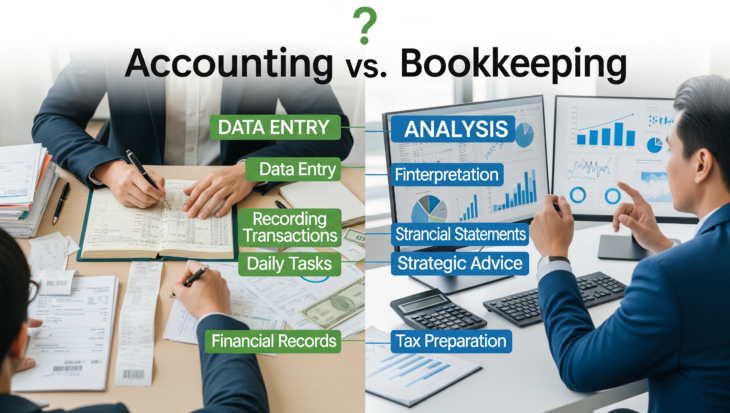
Understanding the difference between accounting and bookkeeping is one of the most common questions people search online when starting a business, managing finances, or planning a career in finance. While these two terms are often used interchangeably, they represent distinct functions within financial management. Both bookkeeping and accounting are essential for the financial health of any organization, whether it is a small startup, a growing business, or a large corporation. Knowing how they differ helps business owners make better decisions, hire the right professionals, and stay compliant with financial regulations.
At a basic level, bookkeeping focuses on recording daily financial transactions, while accounting goes a step further by analyzing, interpreting, and summarizing that financial data. According to industry estimates, over 60% of small business owners say they struggle to understand their finances, mainly because they do not clearly distinguish between bookkeeping and accounting. This blog will explain each concept in detail, answer commonly searched questions, and help you clearly understand how bookkeeping and accounting work together to support business growth.
What Is Bookkeeping?
Bookkeeping is the process of systematically recording a company’s financial transactions daily. These transactions include sales, purchases, receipts, and payments. The primary goal of bookkeeping is accuracy and organization. Bookkeepers ensure that all financial activities are properly documented so the business always has an up-to-date record of its financial position. Without bookkeeping, it would be nearly impossible for a business to track cash flow or prepare financial statements.
In today’s digital world, bookkeeping is often done using accounting software such as QuickBooks, Xero, or FreshBooks. Studies show that businesses using automated bookkeeping tools reduce data entry errors by up to 40%. However, the core responsibility remains the same: recording financial data consistently and in a structured manner. Bookkeeping does not involve deep analysis or strategic planning; instead, it provides the raw financial information that accountants later use for analysis and reporting.
Key Responsibilities of a Bookkeeper
A bookkeeper is responsible for handling routine financial tasks that keep the business organized. These tasks include recording invoices, tracking expenses, managing payroll entries, and reconciling bank statements. By keeping accurate records, bookkeepers help businesses avoid cash shortages and identify spending patterns. Research indicates that small businesses with consistent bookkeeping practices are 30% more likely to survive for 5 years or more.
Another important responsibility of a bookkeeper is maintaining a general ledger. The general ledger serves as the central hub for all financial data. Every transaction recorded by the bookkeeper eventually appears in this ledger. This level of organization ensures that when tax season arrives or financial reports are needed, the information is readily available and accurate.
What Is Accounting?
Accounting is a broader, more advanced process that uses data recorded by bookkeepers to evaluate a company’s financial performance. Accountants analyze financial records, prepare reports, and provide insights that help business owners make informed decisions. While bookkeeping answers the question “What happened financially?”, accounting answers “What does it mean?” and “What should we do next?”.
Accounting involves tasks such as preparing financial statements, filing taxes, conducting audits, and offering financial advice. According to global finance reports, companies that use professional accounting services experience up to 20% better financial planning outcomes. Accountants not only ensure compliance with laws and regulations but also help businesses plan for growth, reduce costs, and improve profitability.
Key Responsibilities of an Accountant
An accountant’s responsibilities go beyond recording data. They interpret financial information to create reports such as income statements, balance sheets, and cash flow statements. These reports provide a clear picture of a company’s financial health and are essential for investors, lenders, and management. Nearly 75% of investors rely heavily on accountant-prepared financial statements when making investment decisions.
Accountants also play a critical role in tax planning and compliance. They ensure that businesses follow tax laws, claim eligible deductions, and avoid penalties. In addition, accountants may offer strategic advice on budgeting, forecasting, and financial risk management, helping businesses make smarter long-term decisions.
Main Differences Between Accounting and Bookkeeping
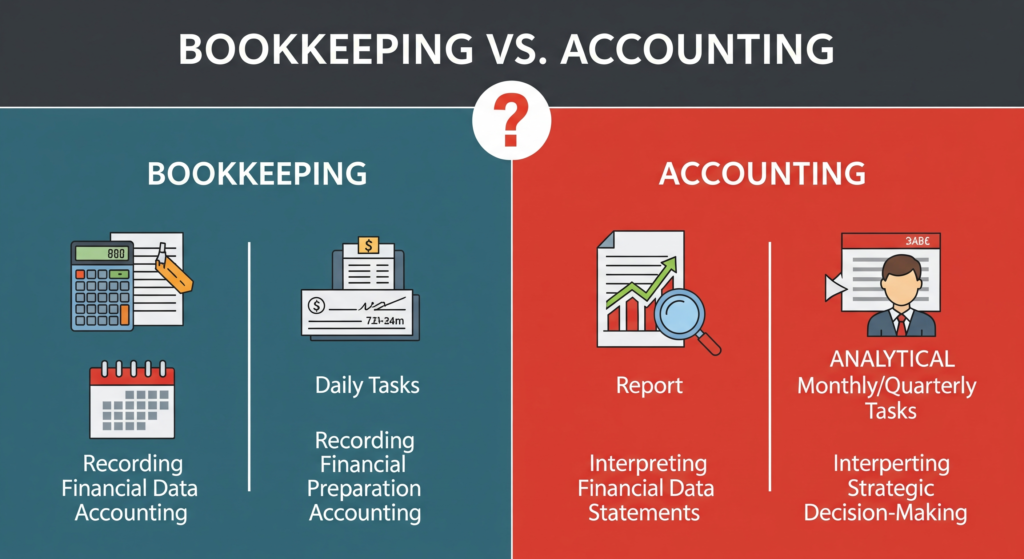
The main difference between accounting and bookkeeping lies in their scope and purpose. Bookkeeping focuses on recording financial transactions, while accounting focuses on interpreting and analyzing those records. Bookkeeping is transactional and administrative, whereas accounting is analytical and strategic. Both roles are essential, but they serve different functions within a business.
Another key difference is the level of expertise required. Bookkeepers typically need strong organizational skills and basic financial knowledge, while accountants usually require formal education, certifications, and advanced training. Statistics show that certified accountants earn, on average, 40% more than bookkeepers due to their higher level of responsibility and Accounting vs Bookkeeping Skills and Tools
Bookkeepers primarily use data entry tools and accounting software to record transactions. Accuracy, consistency, and attention to detail are their most important skills. In contrast, accountants use advanced financial tools, analytical methods, and reporting standards to interpret financial data. They must understand tax laws, financial regulations, and accounting principles.
Both roles increasingly rely on technology, but in different ways. Automation has simplified bookkeeping tasks, while accounting software now offers advanced analytics and forecasting features. Businesses that integrate both bookkeeping and accounting systems report up to a 25% improvement in financial efficiency.
Do Small Businesses Need Both Bookkeeping and Accounting?
One of the most frequently searched questions is whether small businesses need both bookkeeping and accounting services. The short answer is yes, although the extent may vary depending on business size and complexity. Bookkeeping ensures that daily transactions are recorded accurately, while accounting ensures that this information is used effectively for decision-making.
According to small business surveys, over 70% of successful small businesses outsource at least one of these functions. Many startups begin with basic bookkeeping and later add accounting services as they grow. This approach allows business owners to focus on operations while ensuring their finances are managed professionally.
When to Hire a Bookkeeper or Accountant
Hiring a bookkeeper is ideal when a business starts handling regular transactions, payroll, and expense tracking. Bookkeepers help maintain financial order and prevent costly mistakes. On the other hand, hiring an accountant becomes essential for tax preparation, financial planning, and regulatory compliance.
Businesses that consult accountants early in their growth phase are 50% more likely to scale successfully. This highlights the importance of using both bookkeeping and accounting strategically rather than viewing them as interchangeable services.
Career Differences Between Accounting and Bookkeeping
Another popular search topic is the career difference between accounting and bookkeeping. While both careers are in finance, they offer different growth paths and responsibilities. Bookkeeping roles are often entry-level and focus on transactional work, making them a good starting point for finance professionals.
Accounting careers, on the other hand, offer broader opportunities, including auditing, tax consulting, and financial management. Industry data shows that accounting professionals have a higher long-term earning potential and more opportunities for specialization.
Education and Certification Requirements
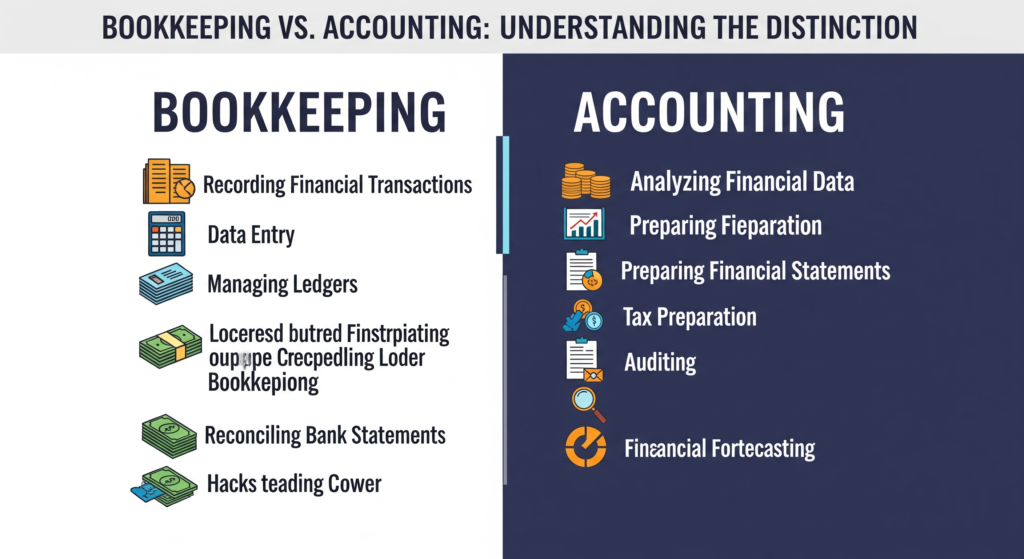
Bookkeepers typically need a diploma or certification in bookkeeping or accounting fundamentals. Some learn through on-the-job experience. Accountants usually require a bachelor’s degree in accounting or finance and may pursue certifications such as CPA or ACCA.
Certified accountants are in high demand globally, with employment growth projected at around 6% annually. This makes accounting a stable and rewarding career choice compared to bookkeeping, which has slower growth but remains essential.
Common Questions People Ask About Accounting and Bookkeeping
People often ask whether accounting is harder than bookkeeping. The answer depends on the level of analysis involved. Accounting requires deeper knowledge, critical thinking, and problem-solving skills. Bookkeeping is more routine but still requires accuracy and discipline.
Another common question is whether software can replace bookkeepers or accountants. While automation can handle basic tasks, studies show that over 80% of businesses still rely on human expertise for financial decision-making and compliance.
Which Is Better for Your Business?
Choosing between accounting and bookkeeping depends on your business needs. If you want to track daily transactions, bookkeeping is essential. If you want insights, compliance, and strategic planning, accounting is necessary. Most businesses benefit from combining both services.
Businesses that use both bookkeeping and accounting report better financial visibility, reduced errors, and improved profitability. This combination creates a strong financial foundation that supports long-term success.
Final Thoughts on Accounting vs Bookkeeping
Understanding the difference between accounting and bookkeeping helps businesses manage finances more effectively. Bookkeeping provides the foundation by recording transactions, while accounting builds on that foundation through analysis and strategy. Together, they form a complete financial management system.
Statistics consistently show that businesses with structured financial processes are more profitable and sustainable. By recognizing the unique roles of bookkeeping and accounting, business owners can make informed decisions, reduce financial risks, and achieve long-term growth.
1. What is the main difference between accounting and bookkeeping?
The main difference is that bookkeeping focuses on recording daily financial transactions, while accounting analyzes, interprets, and reports that financial data for decision-making.
2. Is bookkeeping easier than accounting?
Yes, bookkeeping is generally easier because it involves routine data entry and recordkeeping, while accounting requires analysis, reporting, and knowledge of tax laws.
3. Can a bookkeeper do accounting?
A bookkeeper can perform basic accounting tasks, but advanced functions such as financial analysis, audits, and tax planning require a qualified accountant.
4. Do small businesses need both bookkeeping and accounting?
Yes, most small businesses need bookkeeping for daily records and accounting for financial analysis, tax filing, and long-term planning.
5. Which pays more, accounting or bookkeeping?
Accounting typically pays more than bookkeeping because of higher education requirements, certifications, and more advanced financial responsibilities.
6. Is accounting harder to learn than bookkeeping?
Accounting is harder to learn because it involves complex concepts like financial reporting standards, taxation, and strategic financial management.
7. Can accounting software replace bookkeepers or accountants?
Accounting software helps automate tasks, but it cannot fully replace professional bookkeepers or accountants who provide accuracy, compliance, and expert insights.







Leave a Reply