


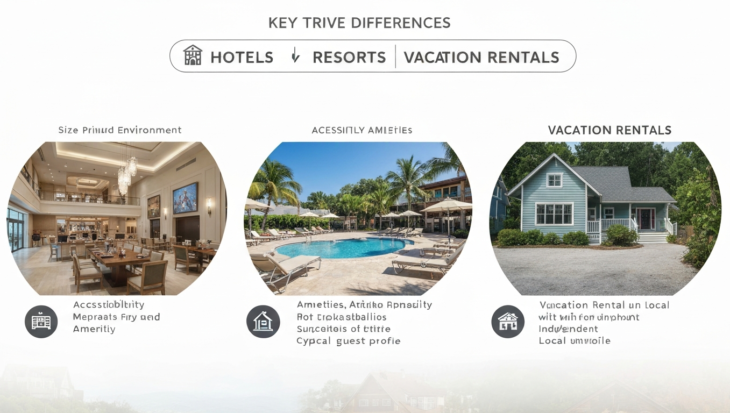
When planning a trip, one of the first questions people ask is: Should I stay in a hotel, a resort, or a vacation rental? This question appears millions of times every month in Google searches because accommodation choice directly affects comfort, budget, experience, and overall trip satisfaction. Travellers today have more options than ever before, and each option serves a different purpose depending on travel style.
According to Statista, over 70% of travellers compare at least two accommodation types before booking. Hotels, resorts, and vacation rentals may seem similar, but they differ significantly in services, privacy, cost, flexibility, and experience. This guide explains every difference clearly so you can choose the best option for your next trip.
1. What Is the Difference in Accommodation Type and Purpose?
Hotels mainly focus on providing short-term stays with standardized services such as daily housekeeping, front-desk support, and room service. Business travellers, solo tourists, and short-stay visitors often prefer hotels because they offer consistency and convenience. Most hotels are located in city centers, near airports, or business districts, making them ideal for quick access and efficiency.
Resorts, on the other hand, aim to provide an all-inclusive leisure experience. They often function as self-contained destinations with restaurants, pools, spas, entertainment, and activities. Vacation rentals differ completely because they offer a home-like environment. According to Airbnb data, over 60% of vacation rental users choose them to “live like a local”, highlighting a different travel purpose altogether.
2. How Do Amenities and Services Differ?
Hotels typically offer essential amenities such as Wi-Fi, housekeeping, concierge services, and on-site dining. Higher-end hotels may include gyms, business centers, and lounges, but amenities usually remain limited to convenience rather than entertainment. This makes hotels ideal for travellers who spend most of their time outside exploring the city.
Resorts focus heavily on amenities and experiences. They often include swimming pools, private beaches, kids’ clubs, wellness centers, guided tours, and multiple dining options. Vacation rentals usually include basic amenities such as kitchens, laundry facilities, and living areas. According to Booking.com, 48% of travellers prefer vacation rentals for kitchen access, which helps save money and adds flexibility.
3. What Is the Difference in Cost and Pricing Structure?
Hotels usually charge per room per night, and pricing varies by location, season, and star rating. Additional costs such as breakfast, parking, and room upgrades can increase the final bill. Business hotels tend to be more affordable, while luxury hotels can be expensive without offering all-inclusive value.
Resorts often appear expensive at first glance, but many operate on an all-inclusive model. This means meals, drinks, and activities are included in the price. Vacation rentals often provide better value for families or groups. Studies show that groups of four or more save up to 35% by choosing vacation rentals over hotels, making them cost-effective for longer stays.
4. How Does Privacy and Space Compare?
Hotels usually offer limited space, especially in standard rooms. Guests share common areas such as lobbies, elevators, and dining spaces. While hotels maintain professional privacy standards, guests still experience high foot traffic and noise in busy locations.
Resorts also have shared spaces but are often spread over large properties, offering more open areas and private zones. Vacation rentals provide the highest level of privacy. Guests have entire homes or apartments to themselves. According to travel surveys, over 55% of travellers choose vacation rentals specifically for privacy, especially families and remote workers.
5. Which Option Is Better for Families and Groups?
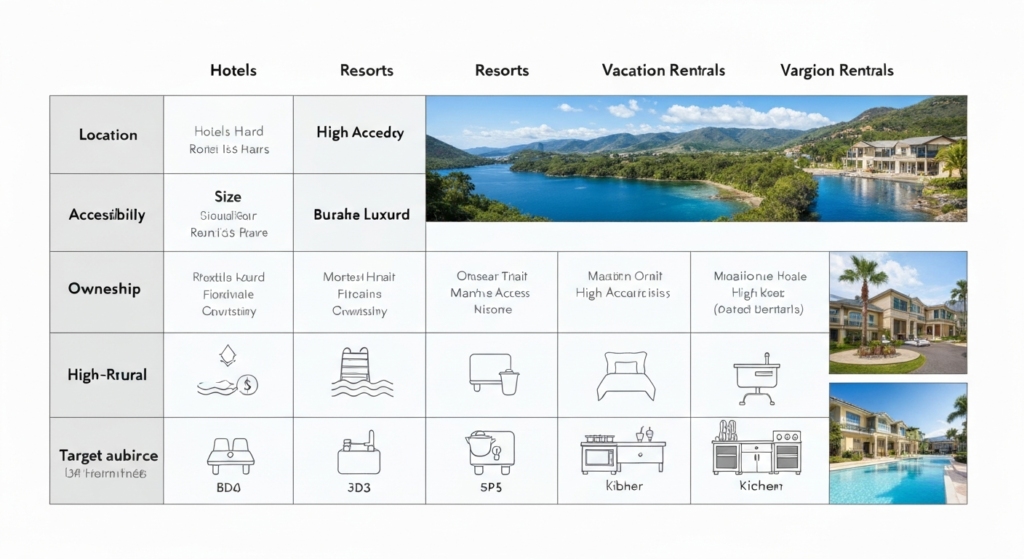
Hotels work well for solo travellers and couples, but families often need multiple rooms, which can increase costs. While some hotels offer family suites, space remains limited. Resorts cater well to families by offering kids’ clubs, activities, and family-friendly dining.
Vacation rentals are often the best option for families and groups. They provide multiple bedrooms, kitchens, and shared living areas. Airbnb reports that family bookings increased by over 40% in the past five years, showing a strong preference for vacation rentals among group travellers.
6. What Is the Difference in Location and Environment?
Hotels are usually located in urban areas, business districts, or transportation hubs. This makes them perfect for city sightseeing, meetings, and short visits. Guests enjoy easy access to restaurants, shopping centers, and public transport.
Resorts are usually located in scenic or remote areas such as beaches, mountains, or islands. Vacation rentals can be found anywhere, from city apartments to countryside villas. According to Expedia, over 50% of leisure travellers prefer accommodations near nature, which explains the popularity of resorts and vacation rentals.
7. How Do Dining Options Differ?
Hotels often provide breakfast and one or two dining options. Guests usually eat outside at nearby restaurants. This offers flexibility but increases daily expenses. Business travellers often prefer this setup due to time efficiency.
Resorts usually include multiple restaurants, bars, and all-inclusive dining packages. Vacation rentals offer kitchens, allowing guests to cook. Research shows that travellers who cook while on trips can reduce food costs by up to 30%, making vacation rentals appealing for long stays.
8. What Is the Difference in Length of Stay Flexibility?
Hotels are ideal for short stays, overnight visits, and business trips. Long stays can become expensive due to nightly rates and limited facilities. Some hotels offer extended-stay options, but they remain costly.
Vacation rentals are best for extended stays. Weekly and monthly discounts make them more affordable. According to AirDNA, over 25% of vacation rental bookings now exceed one week, showing a growing trend toward long-term stays.
9. How Do Customer Service and Support Compare?
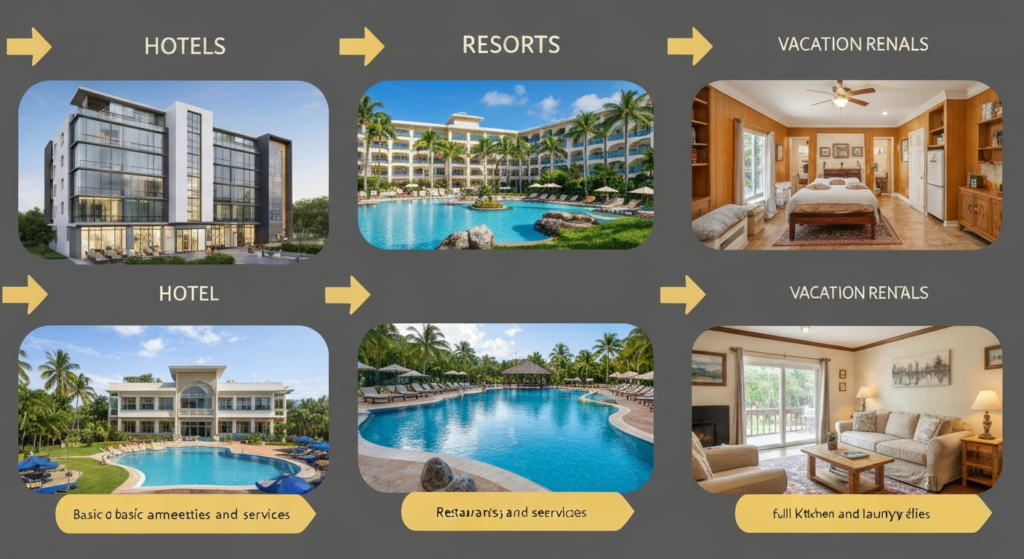
Hotels provide 24/7 professional customer service staffed by trained professionals. Resorts also offer high-level service but focus more on entertainment and guest experience. Vacation rentals rely on hosts, and service quality can vary.
Despite this, guest satisfaction remains high. Airbnb reports an average guest satisfaction rate of over 90%, showing that many travellers value independence over constant service.
10. Which Option Is Best for Different Travel Purposes?
Hotels work best for business trips, short stays, and city travel. Resorts are ideal for honeymoons, family vacations, and relaxation trips. Vacation rentals suit digital nomads, families, and travellers seeking flexibility.
A global travel study shows that travellers who match accommodation type to travel purpose report 60% higher satisfaction. Choosing wisely makes a significant difference in overall experience.
Is a resort better than a hotel?
Resorts are better for relaxation and activities, while hotels are better for convenience.
Are vacation rentals cheaper than hotels?
Yes, especially for families and long stays.
Which is best for first-time travellers?
Hotels offer simplicity and reliable service.
Are vacation rentals safe?
Yes, when booked through trusted platforms with reviews.
Which option gives the best experience?
It depends on your travel goals, budget, and length of stay.
Conclusion: Which Accommodation Type Should You Choose?
Hotels, resorts, and vacation rentals all serve different travel needs. Hotels offer convenience and reliability, resorts deliver luxury and entertainment, and vacation rentals provide space and flexibility. Understanding these differences helps travellers make smarter decisions.
With travel preferences constantly evolving, choosing the right accommodation can improve comfort, save money, and enhance your overall journey. Always consider your purpose, budget, and travel style before booking.








Leave a Reply