


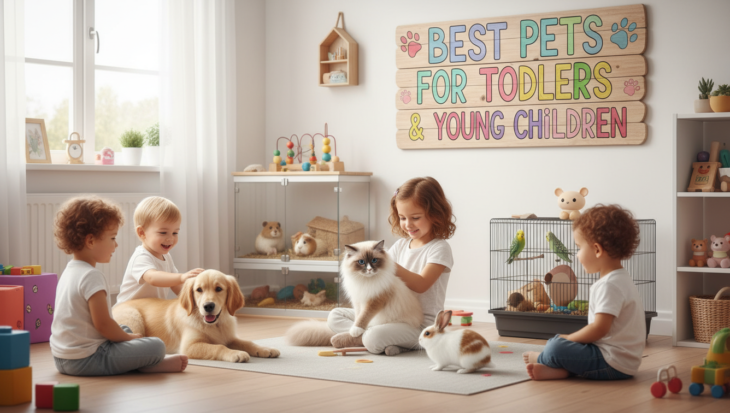
Choosing the right pet for toddlers and young children is an important decision for any family. Parents often search for “best pets for toddlers” or “safe pets for young children” because they want an animal that is gentle, easy to care for, and safe around little ones. A well-chosen pet can help children learn responsibility, kindness, and emotional bonding from an early age, while also bringing joy and companionship into the home.
According to the American Pet Products Association, over 70% of families with children own at least one pet, and studies show that children who grow up with pets experience lower stress levels, improved immune systems, and better social skills. However, not all pets are suitable for toddlers. This guide explores the 15 best pets for toddlers and young children, focusing on safety, temperament, care requirements, and educational value to help parents make a confident and informed choice.
Why Do Parents Search for the Best Pets for Toddlers?
Many parents search for “best pets for toddlers and young children” because they want to teach responsibility, compassion, and emotional bonding at an early age. Pets help children develop empathy, reduce stress, and improve social skills. However, not every pet suits a household with toddlers. Safety, temperament, hygiene, and care level all matter.
According to the American Pet Products Association (APPA), over 67% of U.S. households own a pet, and families with children are among the fastest-growing pet-owning groups. Studies show that children who grow up with pets have lower anxiety levels, stronger immune systems, and better emotional development, making pet selection an important decision.
1. Why Are Dogs One of the Best Pets for Young Children?
Dogs are one of the most popular family pets because of their loyalty, intelligence, and ability to bond with children. Many family-friendly dog breeds are gentle, patient, and protective, making them ideal companions for toddlers. Dogs also help children learn responsibility through daily routines like feeding, walking, and grooming.
Statistics from the CDC show that children who grow up with dogs have a 13% lower risk of developing asthma and allergies. Dogs also encourage outdoor play and physical activity, helping toddlers stay active and engaged while forming emotional bonds.
2. Are Cats Safe Pets for Toddlers and Young Kids?
Cats make excellent pets for families looking for a calm, low-maintenance companion. Many cats enjoy quiet play and gentle affection, which suits toddlers when supervised. Cats also teach children to respect boundaries, as they prefer calm interactions rather than rough handling.
Research from the National Institutes of Health indicates that children raised with cats show improved emotional intelligence and reduced stress levels. Indoor cats, in particular, are safer and cleaner options for homes with young children.
3. Why Are Fish Ideal Starter Pets for Toddlers?
Fish are often the first pets parents choose for toddlers because they require minimal handling and pose no physical risk. Watching fish swim helps children develop curiosity, patience, and observation skills. Fish tanks also create a calming environment in the home.
Studies show that watching aquarium fish can reduce heart rate and anxiety in children by up to 12%. Fish teach toddlers responsibility through feeding routines while keeping safety risks low.
4. Are Hamsters Good Pets for Young Children?
Hamsters are small, cute, and fascinating for children to observe. They teach kids about gentle handling and basic pet care. Hamsters require cages, exercise wheels, and regular feeding schedules, which parents can manage with children.
According to pet behaviour experts, hamsters are best for children aged 5 and above, as toddlers should only observe. With proper supervision, hamsters help children learn respect and responsibility.
5. Why Are Guinea Pigs Better Than Hamsters for Toddlers?
Guinea pigs are known for their friendly nature and gentle temperament. Unlike hamsters, guinea pigs enjoy being held and are less likely to bite. Their social behaviour makes them excellent pets for children who want interaction.
Veterinary studies show that guinea pigs recognize human voices and respond positively to gentle handling, making them safer and more predictable pets for young families.
6. Are Rabbits Safe Pets for Toddlers?
Rabbits are quiet, clean, and affectionate animals that thrive in calm environments. They teach children gentleness and patience, as rabbits dislike sudden movements. With proper care, rabbits can form strong bonds with young family members.
Research indicates that rabbit-assisted interaction helps children develop empathy and emotional regulation, making rabbits a valuable emotional companion.
7. Why Are Turtles Low-Maintenance Pets for Kids?
Turtles are fascinating pets that live long lives and require minimal interaction. They allow children to observe nature and learn about responsibility without daily handling.
According to reptile care studies, turtles can live 20–50 years, teaching children long-term commitment and respect for living creatures.
8. Why Are Chickens Becoming Popular Family Pets?
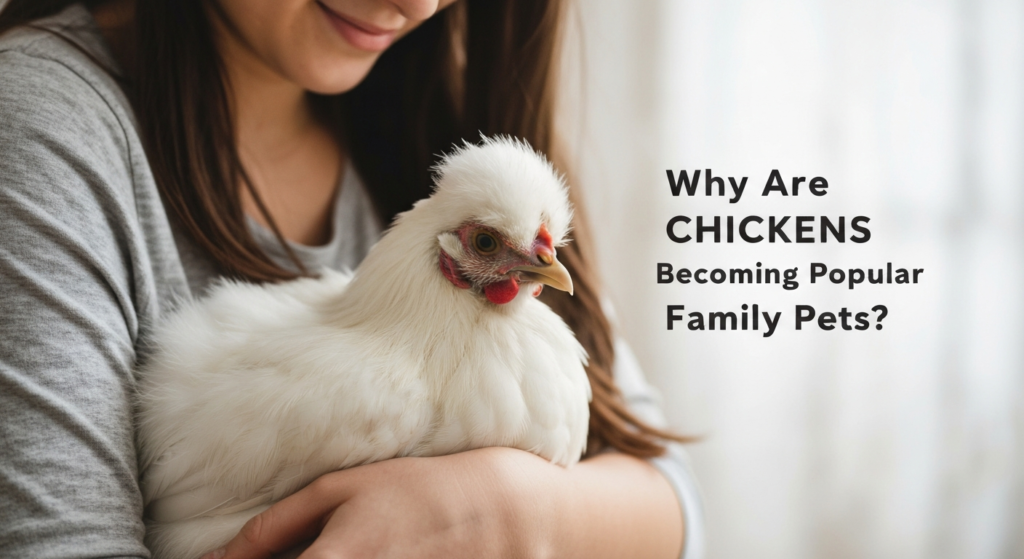
Backyard chickens teach children about food sources, responsibility, and animal care. They are social and interactive when raised properly.
According to agricultural studies, children involved in animal care show higher responsibility and confidence levels, making chickens valuable learning companions.
9. Are Birds Good Pets for Young Children?
Birds like budgies and cockatiels are intelligent, colourful, and interactive pets. They enjoy social interaction and can mimic sounds, keeping children engaged.
Studies show that children exposed to birds develop better listening skills and emotional awareness. Birds require supervision but offer rewarding companionship.
10. Why Are Betta Fish Popular for Toddlers?
Betta fish are low-maintenance and visually appealing. They live alone and require simple tank setups, making them ideal for beginners.
Research indicates that aquariums improve attention span and reduce stress in children, making betta fish an educational and calming pet choice.
11. Are Frogs and Small Amphibians Safe for Kids?
Frogs are interesting pets that allow children to learn about ecosystems. They require observation rather than handling, reducing safety concerns.
Educational studies show that children who learn about animals early develop stronger environmental awareness, making amphibians educational pets.
12. Are Small Dogs Better Than Large Dogs for Toddlers?
Small dogs often adapt better to apartment living and are easier for children to interact with physically. Breeds like Cavalier King Charles Spaniel and Pug are gentle and affectionate.
Veterinary research shows that small, calm breeds reduce accidental injuries by 40% compared to high-energy large breeds in households with toddlers.
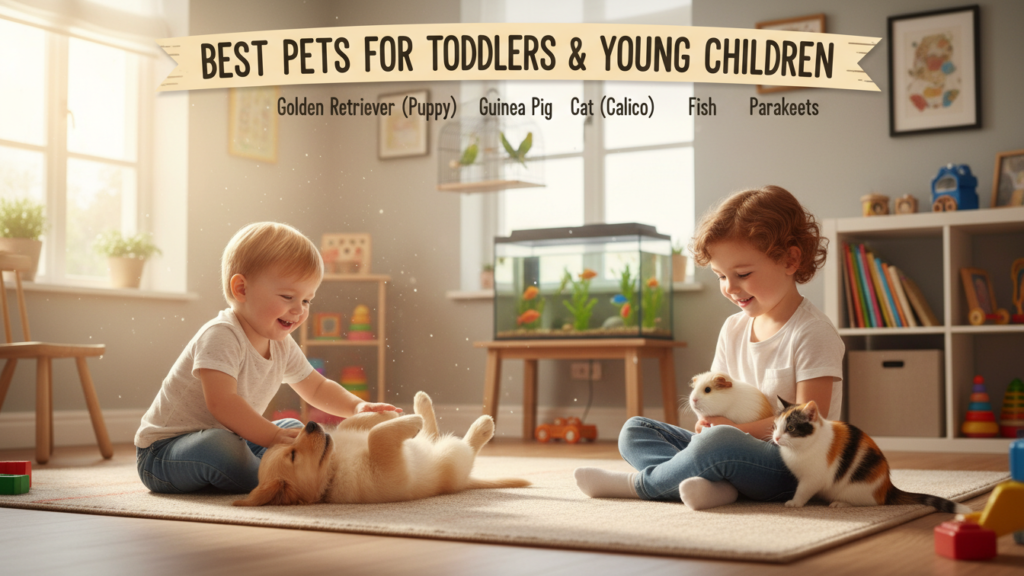
13. Why Are Cats Better Than Dogs for Busy Parents?
Cats require less attention and exercise than dogs, making them ideal for busy families. They offer companionship without demanding constant activity.
Surveys show that cat-owning families experience lower daily pet-care stress, making cats practical companions for households with young children.
14. Are Snails and Insects Good Educational Pets?
Snails and insects like stick insects are safe, silent, and educational. They allow children to learn biology and life cycles without physical risks.
Educational research confirms that early exposure to animals improves scientific curiosity and learning retention in children.
15. What Is the Safest Pet for Toddlers Overall?
The safest pet depends on supervision, temperament, and family lifestyle. Fish, guinea pigs, cats, and calm dog breeds consistently rank highest for toddler safety.
According to child-pet safety studies, supervised pet interactions reduce injury risks by over 85%, emphasizing the importance of parental involvement.
What is the safest pet for a 2-year-old?
Fish and guinea pigs are safest with supervision.
Do pets help child development?
Yes, pets improve empathy, responsibility, and emotional health.
Can toddlers get sick from pets?
Proper hygiene and supervision reduce risks significantly.
Which pet requires the least maintenance?
Fish and turtles require minimal daily care.
Conclusion: Choosing the Best Pet for Your Child
Choosing the right pet for toddlers and young children plays a powerful role in shaping their emotional, social, and cognitive development. A well-matched pet helps children learn empathy, patience, and responsibility while providing companionship and comfort. Whether it’s a gentle dog, a calm cat, a friendly guinea pig, or a low-maintenance fish, the right pet can become a trusted friend as your child grows. Research consistently shows that children raised with pets develop stronger emotional intelligence, improved immune systems, and better social skills. However, success depends on supervision, proper hygiene, and teaching children how to interact safely and respectfully with animals.
At the same time, parents must remember that pets are a long-term commitment, not a temporary source of entertainment. Each animal has unique needs related to care, space, time, and attention, and adults must take responsibility for meeting those needs. By choosing a pet that aligns with your family’s lifestyle and your child’s age, you create a safe and nurturing environment for both the pet and your child. When families invest time in education, routine care, and positive interaction, pets become more than companions, they become teachers, helpers, and cherished members of the family.






Leave a Reply