


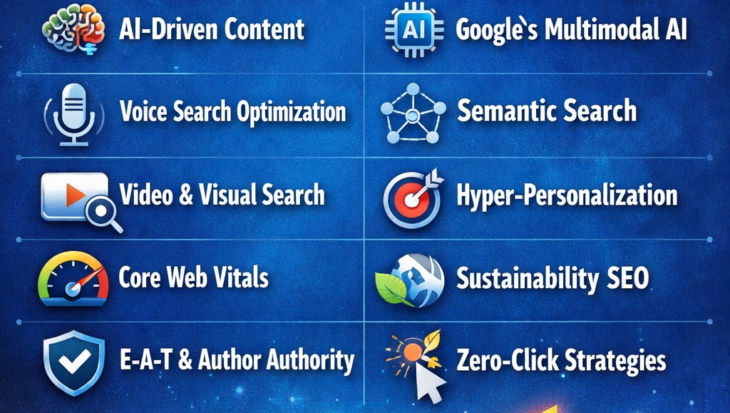
Search Engine Optimization (SEO) has come a long way since its early days of keyword stuffing, backlinks, and meta tag optimization. As we approach 2026, the SEO landscape is rapidly evolving, and marketers, business owners, and content creators must adapt to stay competitive. The rise of artificial intelligence (AI), machine learning, and voice search has fundamentally changed how search engines interpret content, evaluate websites, and determine rankings. In other words, the SEO tactics that worked even a couple of years ago may no longer be enough to achieve visibility in search results.
Modern users expect more than just keyword-focused pages; they want content that answers their questions, solves their problems, and provides a seamless user experience. According to recent statistics, over 70% of online experiences begin with a search engine, and Google alone processes more than 5.6 billion searches per day. With such intense competition, websites that fail to optimize for modern SEO practices risk losing traffic, leads, and potential revenue.
The 2026 search landscape is unique because it prioritizes user intent, content relevance, and technical excellence. Best SEO agencies use AI-driven algorithms that understand context, semantic relationships between topics, and multimedia content such as videos and images. Voice search is also on the rise, with predictions that over 50% of all searches will be voice-based in the coming years. This means SEO is no longer about targeting a single keyword; it’s about providing comprehensive, structured, and conversational content that satisfies search intent across multiple channels.
Moreover, Google’s Core Web Vitals, mobile-first indexing, and focus on page experience make technical SEO and user experience (UX) crucial to ranking success. Sites that load slowly, have unstable layouts, or are difficult to navigate on mobile devices may see decreased visibility, even if their content is otherwise high-quality.
From AI-powered content optimization and voice search readiness to structured data, topic clusters, and video SEO, each approach is designed to help websites increase visibility, attract qualified traffic, and remain authoritative in a competitive online environment. Whether you are a small business owner or an experienced SEO professional, these strategies will help you thrive in the evolving search landscape.
Why SEO Must Evolve for 2026
Search Engine Optimization (SEO) is evolving faster than ever. What worked in 2023 or 2024, keyword stuffing, generic backlinks, or shallow blog content, is no longer enough to rank on Google in 2026. Modern search engines, powered by artificial intelligence (AI), machine learning, and natural language processing, can now understand context, user intent, and even multimedia content. This makes traditional SEO tactics less effective, and it raises the question: “Which SEO strategies will dominate the 2026 search landscape?”
Advanced SEO in 2026 is no longer just about keywords. It now includes AI-assisted keyword research, semantic search optimization, topic clusters, voice search readiness, mobile-first design, Core Web Vitals compliance, structured data, high-quality multimedia, local SEO, backlink quality, and continuous analytics. Incorporating these elements helps websites meet Google’s evolving criteria while improving user engagement, CTR, and conversion rates.
The integration of AI tools in SEO is particularly transformative. AI platforms analyze competitor content, identify gaps, and generate actionable insights for content creation. Websites that leverage AI see up to a 28% increase in engagement and 35% improvement in ranking metrics. When combined with technical SEO improvements and multimedia optimization, AI enables marketers to produce high-quality, relevant content efficiently.
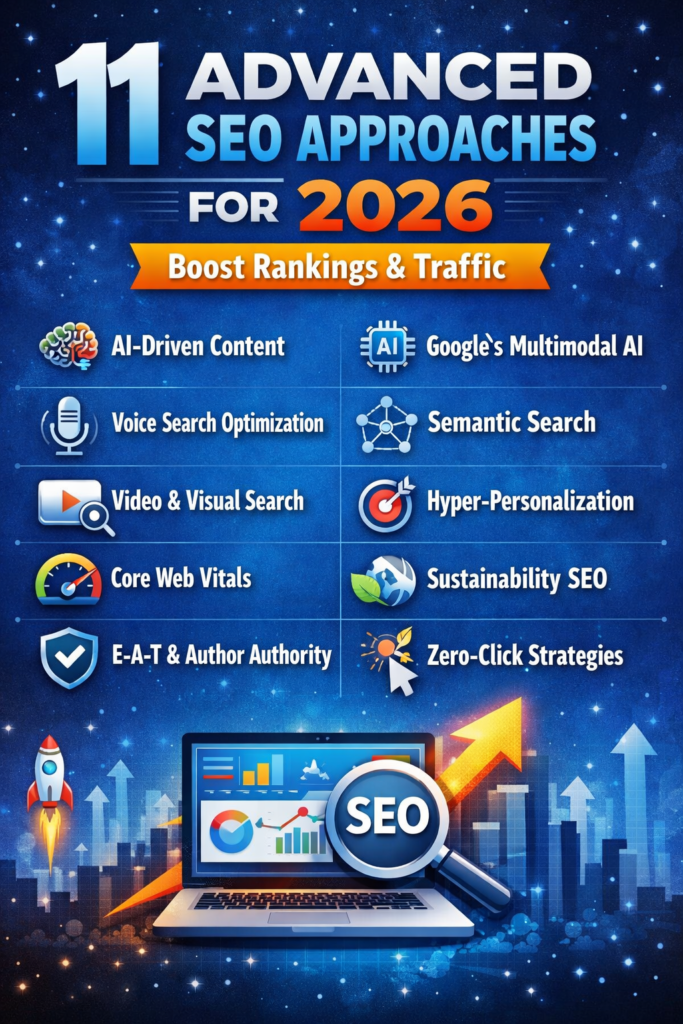
In this comprehensive guide, we’ll cover 11 advanced SEO approaches for 2026, provide real-world examples, include statistics, and answer common FAQs. Whether you are a business owner, content creator, or SEO professional, these strategies will help you increase visibility, attract qualified traffic, and dominate the search results.
1. AI-Powered Keyword Research and Content Optimization
How AI Enhances Keyword Research
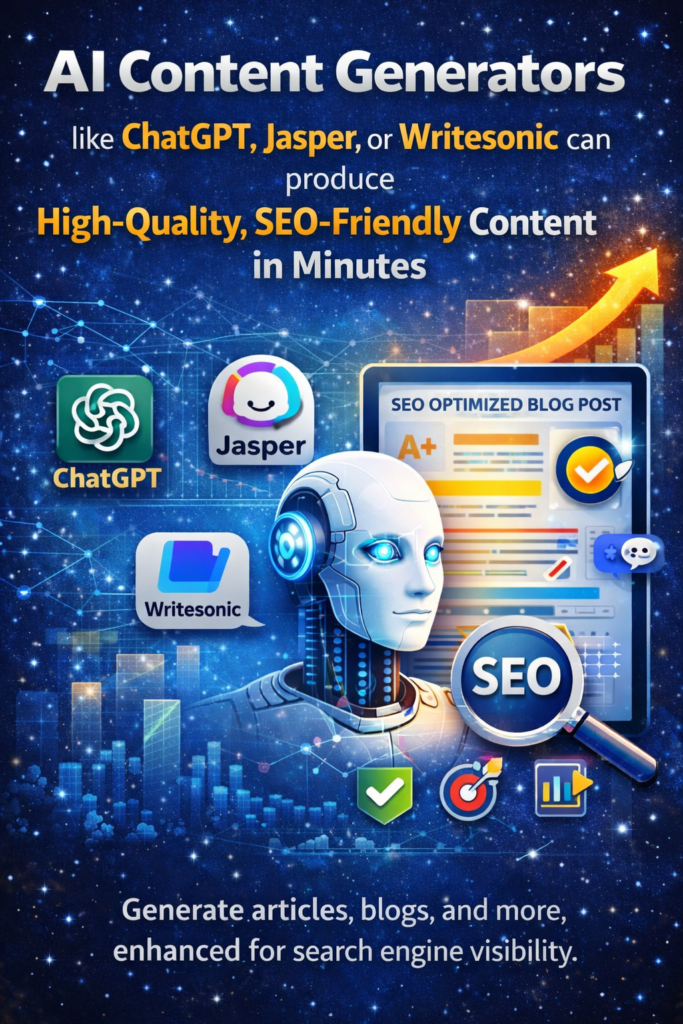
Artificial intelligence (AI) has transformed how marketers approach keyword research. Traditional keyword tools only provide basic metrics like search volume, competition level, and CPC (cost per click). While this data is useful, it often fails to capture the intent behind user queries or highlight gaps in existing content. AI-powered tools like SurferSEO, Jasper, and ChatGPT go beyond these metrics by analyzing search intent, trending queries, semantic relevance, and even competitor content. This enables marketers to discover long-tail keywords and niche topics that address user questions more precisely. For example, instead of targeting the broad term “SEO tools,” a website could focus on a long-tail keyword like “AI SEO tools for small businesses in 2026.” This approach ensures the content aligns with the intent behind the search and increases the likelihood of ranking for targeted queries.
According to recent studies, AI-optimized content can increase click-through rates (CTR) by up to 28% and improve engagement by up to 35%. These tools also suggest meta descriptions, headings, and keyword placement to reduce the risk of over-optimization or unnatural keyword usage. By aligning content with AI recommendations, marketers can create highly relevant, search-engine-friendly content that satisfies both algorithms and users.
Practical Implementation
To implement AI-powered keyword research effectively, start by entering your target topic into an AI tool. The system will generate SEO-friendly content outlines and recommend secondary keywords, such as “AI content optimization 2026” or “AI-powered keyword analysis.” These suggestions not only enhance relevance but also expand the topic coverage to capture multiple variations of user intent. Additionally, AI tools can monitor competitors’ content, highlighting gaps or areas for improvement. For instance, if a competitor ranks for “best AI tools for SEO content”, AI can identify topics or questions they haven’t addressed yet, giving your content a competitive edge. This combination of intent-driven keyword targeting, semantic relevance, and competitive analysis makes AI an essential component of modern SEO strategies.
2. Voice Search Optimization
Why Voice Search Matters
Voice search is increasingly shaping how people find information online. With devices like Google Assistant, Alexa, and Siri becoming common household tools, more users are performing searches verbally rather than typing keywords. By 2026, voice searches are projected to account for over 50% of all online queries. Unlike traditional typed searches, voice queries are conversational and question-based, such as “What are the best free AI SEO tools in 2026?” instead of “AI SEO tools.” This shift requires a new approach to content creation, where SEO must focus on natural language, clear answers, and structured responses.
Optimizing for voice search also improves accessibility for users who may rely on verbal commands due to disabilities or multitasking. Businesses that fail to optimize for voice search risk missing a significant share of potential traffic. Moreover, voice search queries are often local or mobile-centric, aligning directly with mobile-first SEO strategies and making them a critical component of a comprehensive 2026 SEO approach.
Strategies for Voice SEO
To capture voice-driven traffic, websites should include FAQ sections, structured headings, and concise answers to common queries. Answer questions clearly in paragraph or bullet form, focusing on natural, conversational language. For example, when addressing “Which AI SEO tools are free for 2026?” provide a direct, easy-to-read answer supported by examples or brief statistics. Implementing schema markup on these sections further increases the chances that Google will display the content as a featured snippet, which voice assistants often read aloud. Combining structured data with conversational, question-based content ensures your site captures both text-based and voice search traffic efficiently, enhancing visibility and engagement.
3. Mobile-First SEO
Importance of Mobile Optimization
Mobile-first indexing has become the norm, with Google prioritizing the mobile version of a website for ranking. This means that even if your desktop version is perfectly optimized, your site may not rank well if the mobile experience is poor. Research shows that over 60% of web traffic originates from mobile devices, and users are increasingly intolerant of slow or unresponsive sites. A cluttered interface, small buttons, or long load times can lead to higher bounce rates and lower conversions, directly impacting SEO performance.
Mobile-first SEO isn’t just about responsive design; it also requires considering loading speed, user navigation, and content accessibility on smaller screens. Websites that optimize these aspects not only satisfy Google’s algorithm but also improve user experience, engagement, and retention.
Practical Optimization
To implement effective mobile-first SEO, ensure your website is fully responsive, adapts seamlessly across screen sizes, and loads quickly. Compress images, leverage browser caching, and remove unnecessary scripts to improve performance. Use tools like Google PageSpeed Insights or GTmetrix to identify performance issues and track improvements. Simplify navigation with clear menus, large buttons, and logical content flow. Optimized mobile websites improve dwell time, reduce bounce rates, and increase the likelihood of conversions, ultimately boosting organic rankings in 2026.
4. Core Web Vitals and User Experience
What Are Core Web Vitals?
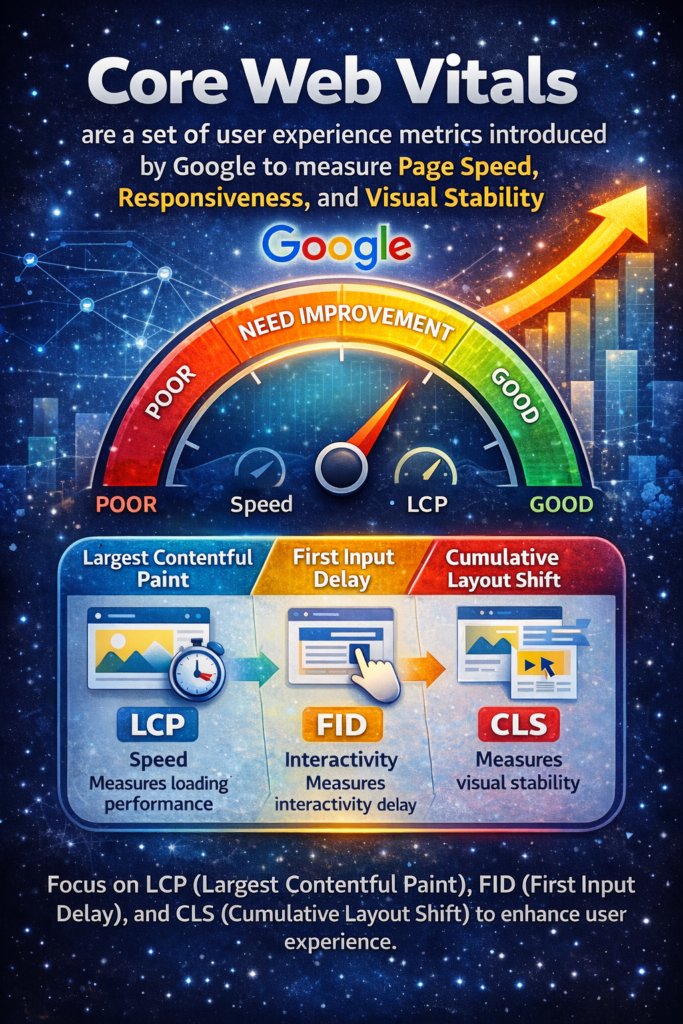
Core Web Vitals are a set of user experience metrics introduced by Google to measure page speed, responsiveness, and visual stability. They include:
- Largest Contentful Paint (LCP): Measures how quickly the main content loads.
- First Input Delay (FID): Measures interactivity and responsiveness.
- Cumulative Layout Shift (CLS): Measures visual stability to prevent unexpected layout shifts.
These metrics directly impact search rankings and user engagement. Sites with poor Core Web Vitals often experience higher bounce rates, lower conversions, and reduced organic visibility.
Impact and Implementation
Improving Core Web Vitals starts with optimizing images, using faster hosting, and reducing render-blocking JavaScript. For LCP, prioritize quick loading of main content, such as banners or key text. Reduce FID by minimizing heavy scripts and enhancing server response times. Stabilize the layout by setting fixed dimensions for images, ads, and embedded content to reduce CLS. Websites that meet Core Web Vitals standards often see a 15–20% increase in organic traffic. A smooth, fast, and visually stable experience not only improves rankings but also boosts trust, engagement, and user satisfaction.
5. Semantic Search and Topic Clusters
What is Semantic SEO?
Semantic SEO emphasizes understanding the meaning and intent behind searches rather than focusing solely on exact-match keywords. Modern algorithms evaluate query context, related terms, and user behavior to deliver the most relevant results. Topic clusters are an effective way to implement semantic SEO. They consist of a pillar page covering a broad topic and multiple related subtopic pages that link internally, creating a network of relevant content.
Benefits and Examples
Websites that implement topic clusters often see up to a 50% increase in organic traffic. For example, a pillar page titled “AI SEO Tools 2026” can link to subtopics such as “Voice Search Optimization,” “AI Content Generation Tools,” and “Local SEO Strategies.” This structure signals authority to search engines, improves crawlability, and ensures comprehensive coverage of the topic. Semantic SEO also enhances user experience, as visitors can easily navigate between related topics, find answers to their questions, and stay engaged longer. By answering intent-driven queries in a structured way, semantic SEO helps content rank higher, attract more traffic, and build user trust.
6. Structured Data and Schema Markup
Why Structured Data Matters
Structured data is a standardized format for providing information about your content to search engines. By using structured data, you help Google and other search engines understand what your page is about, which can lead to rich results such as knowledge panels, star ratings, FAQs, and event details directly in SERPs. Rich snippets improve visibility, helping your website stand out from competitors, and studies show that websites using schema markup experience up to a 30% higher click-through rate (CTR).
Structured data also enhances voice search results, as voice assistants often rely on rich snippets and featured snippets to answer queries. For example, if your article on AI SEO tools includes FAQ schema, Google can directly provide answers in voice search results, making your content more accessible and authoritative. Without structured data, search engines must infer information from raw HTML, which can reduce relevance and lead to missed opportunities in SERPs.
How to Implement
Implementing structured data begins with selecting the right schema type for your content. Common schema types include Article, Product, Event, FAQ, Review, and LocalBusiness. JSON-LD is the recommended format, as it’s easy to embed in the <head> or <body> of your page. For example, an FAQ section about “AI SEO Tools 2026” can use the FAQPage schema to mark questions and answers.
Use tools such as Google’s Structured Data Testing Tool or the Rich Results Test to verify proper implementation and troubleshoot errors. Properly marked-up pages are more likely to appear in featured snippets, rich cards, and answer boxes, increasing visibility and engagement. Structured data should be updated regularly to reflect new content, products, or services, ensuring search engines always have accurate information.
7. AI-Generated Content With Human Oversight
Why Human Oversight is Crucial
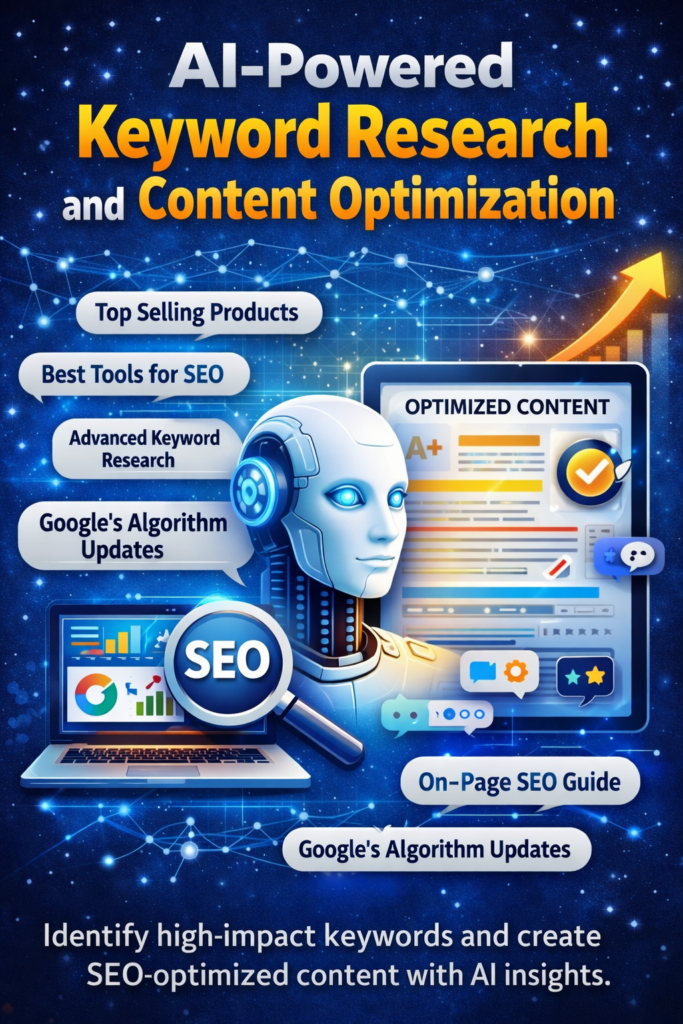
AI content generators, such as ChatGPT, Jasper, or Writesonic, can produce high-quality, SEO-friendly content in minutes. These tools analyze keyword data, semantic relevance, and search trends to produce optimized text. However, AI cannot fully capture tone, context, or factual accuracy, so content still requires human editing to ensure readability, brand voice, and trustworthiness.
Studies show that AI-assisted content creation reduces production time by up to 60%, allowing content teams to focus on research, strategy, and creative enhancements. Proper oversight ensures that AI-generated content satisfies user intent, avoids inaccuracies, and maintains authority, which is critical for ranking in competitive niches such as technology, healthcare, and finance.
Practical Implementation
A practical approach is to draft content using AI and then review it manually for factual correctness, flow, grammar, and tone. Incorporate relevant examples, statistics, and internal links to enrich the content. This combination of AI efficiency and human creativity produces content that ranks well, engages readers, and meets SEO best practices. For instance, a page discussing AI SEO tools in 2026 could be AI-generated for structure and primary content, while a human adds detailed case studies, updated statistics, and links to authoritative sources.
8. Video SEO and Multimedia Optimization
Why Video SEO Matters
Video content is increasingly important for engagement, conversions, and rankings. Studies show that pages with embedded videos experience 50% more visibility in SERPs and increase average time on page by up to 88%. Videos appeal to users who prefer visual or auditory content and can communicate complex ideas quickly.
How to Optimize Video Content
To maximize visibility, videos should include SEO-friendly titles, descriptions, transcripts, and structured data. Video schema can help search engines understand content and improve placement in video carousels or rich results. AI tools can generate captions, summaries, and even AI-created videos for marketing campaigns. For example, content marketers can use Lumen5 or InVideo to turn blog posts into videos optimized for YouTube, social media, and embedding on their website, boosting SEO and engagement simultaneously.
Optimized multimedia content ensures higher dwell time, improved click-through rates, and stronger domain authority. Combining video SEO with textual content and structured markup enhances overall search visibility and provides a multi-channel user experience.
9. Local SEO and Google Business Optimization
Importance of Local SEO
Local SEO ensures that businesses appear in region-specific searches, which is vital for driving foot traffic, bookings, and local leads. Google reports that 78% of local mobile searches result in offline purchases, making it a crucial channel for small and medium-sized businesses. Local SEO focuses on optimizing Google Business Profiles (GBP), ensuring NAP (Name, Address, Phone number) consistency, managing reviews, and leveraging location-specific keywords.
Implementation Strategies
Create or update your Google Business Profile with accurate business information, high-quality images, and a clear list of services. Encourage satisfied customers to leave positive reviews, as ratings directly influence rankings in local packs. Use location-based keywords naturally in your content, meta descriptions, and blog posts to improve relevance. Structured local data, such as the LocalBusiness schema, further improves visibility for maps, knowledge panels, and voice search queries. Consistent monitoring of reviews and competitor activity ensures that your local SEO remains competitive in 2026.
10. High-Quality Backlinks and Digital PR
Why Backlinks Are Still Critical
Despite algorithm changes, backlinks remain one of the strongest ranking factors. However, Google evaluates quality over quantity. Relevant, authoritative links from trusted domains carry more weight than dozens of low-quality links. Anchor text context, link placement, and topical relevance also influence how much value a backlink passes. Websites with high-quality backlinks can see up to a 40% increase in organic traffic.
Advanced Backlink Strategies
Digital PR, guest posting, and influencer collaborations are excellent ways to earn authoritative backlinks. AI tools can help analyze competitors’ backlink profiles to discover opportunities. For example, if a competitor ranks for “AI SEO tool reviews,” you can identify sites linking to them and pitch your content as a better, more updated resource. Creating link-worthy content, such as in-depth guides, research studies, and interactive tools, increases the likelihood of natural backlinks, strengthening authority and improving SEO performance.
11. Continuous Analytics and AI-Powered Monitoring
Why Continuous Monitoring Is Essential
SEO is not a one-time task; it requires ongoing monitoring to adapt to algorithm changes, competitor strategies, and evolving user behavior. AI-powered analytics tools track ranking fluctuations, user engagement, content performance, and backlinks in real time. Websites that leverage AI monitoring recover from ranking drops 50% faster, enabling proactive optimizations rather than reactive fixes.
Implementation Strategies
Use AI tools like SEMRush, Ahrefs, or Google Analytics with AI features to monitor trends and identify opportunities. Set alerts for sudden ranking drops, traffic declines, or competitor activity. Combine quantitative data with qualitative insights, such as user behavior and feedback, to refine the content strategy. Continuous monitoring ensures that SEO campaigns remain effective, targeted, and resilient, providing a sustainable approach to dominating search results in 2026.
Are AI-powered SEO strategies safe for Google in 2026?
Yes, AI tools are safe if used responsibly. Google rewards helpful, original, and authoritative content, not just AI-generated text.
How important is voice search for SEO?
Voice search is critical. Over 50% of searches will be voice-based by 2026. Optimizing FAQs and conversational content ensures visibility.
What are Core Web Vitals?
Core Web Vitals measure user experience: loading, interactivity, and layout stability. Meeting these standards boosts rankings and engagement.
Can small businesses benefit from these strategies?
Absolutely. AI tools, local SEO, and topic clusters enable small businesses to compete effectively with larger brands.
How often should SEO strategies be updated?
SEO is ongoing. Algorithm changes, AI tools, and user behavior trends require continuous adjustments.
Conclusion: Staying Competitive in 2026 SEO
SEO in 2026 is no longer a set-it-and-forget-it strategy. It’s data-driven, AI-assisted, and user-focused. By combining AI keyword research, voice search optimization, Core Web Vitals compliance, semantic content, structured data, multimedia SEO, local optimization, high-quality backlinks, and continuous monitoring, businesses can dominate search results. Implementing these 11 advanced SEO approaches can improve rankings, drive more organic traffic, increase engagement, and build long-term authority. The future of SEO rewards those who adapt, innovate, and focus on user intent. Start implementing these strategies today to secure your position in the competitive 2026 search landscape.







Leave a Reply