



Planning an event, whether it’s a birthday party, wedding, conference, product launch, or corporate gala, can feel overwhelming. Managing vendors, coordinating guests, designing décor, handling budgets, and managing time can turn into a full-time job. That is why millions of people search online for event planners who can eliminate stress, manage everything professionally, and deliver a smooth, memorable event.
This detailed blog answers the top questions people search for on Google about event planning. Each section is written to give you a deep, clear, and practical understanding of how event planners work, so you can confidently hire the right one.
1. What Is an Event Planner and What Do They Actually Do?
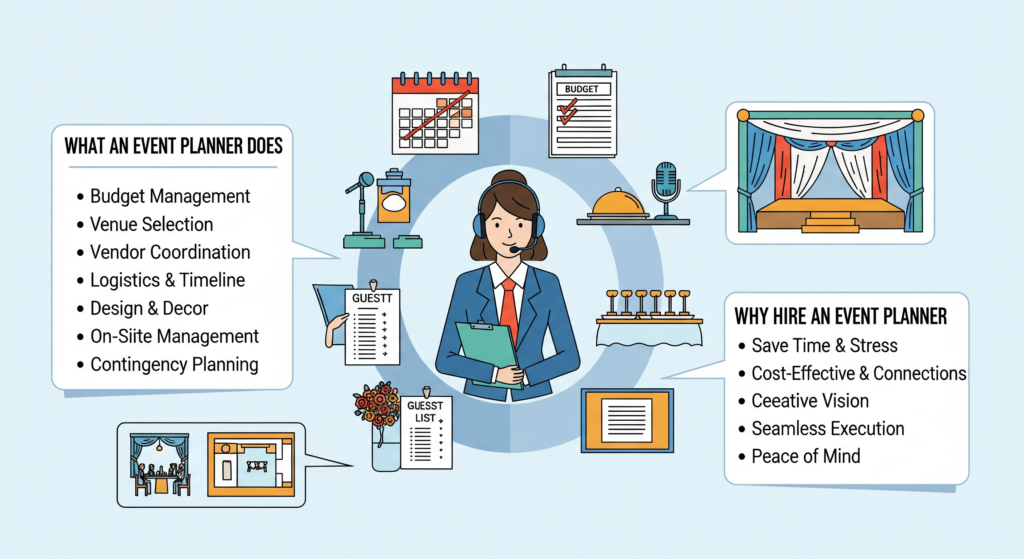
An event planner is a professional who manages every stage of an event, from concept development to execution. They create event themes, manage vendors, arrange décor, handle logistics, coordinate guest experience, and ensure the entire event runs smoothly. Their role extends beyond decoration; it includes budgeting, scheduling, troubleshooting, and complete project management.
Event planners also act as problem-solvers who anticipate challenges before they happen. They manage timelines, negotiate pricing, design layouts, oversee technical arrangements, and remain on-site during the event to ensure everything runs smoothly. Their goal is to bring the client’s vision to life while ensuring the client can relax and enjoy the occasion.
2. Why Do People Hire Event Planners for Events?
People hire event planners mainly to reduce stress and save time. Events include dozens of small tasks, vendor calls, décor selections, venue meetings, guest coordination, and equipment arrangements. A single mistake can disrupt the entire event.
Event planners eliminate the pressure by taking full responsibility. They bring creativity, organization, professionalism, and experience. Most importantly, they ensure that every aspect of the event is aligned, well managed, and memorable. Clients choose planners for a stress-free experience and a flawless event.
3. How Does the Event Planning Process Work from Start to Finish?
Event planning follows a straightforward step-by-step process. It begins with a consultation to understand your goals, theme, budget, and expectations. After that, the planner creates a complete event plan, timeline, and concept.
Next, they select vendors, create mood boards, and coordinate with teams such as décor, catering, photography, and entertainment. On the day of the event, the planner handles all logistics, manages schedules, and resolves issues in real time. After the event, they ensure proper cleanup, payments, and follow-up evaluations. This process ensures organization and perfection throughout.
4. What Are the Responsibilities of an Event Planner?
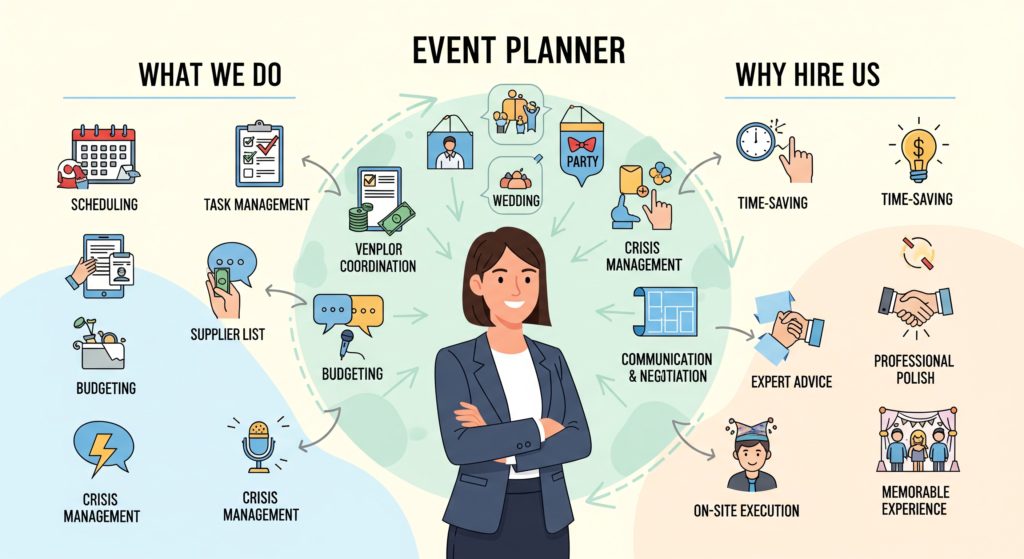
An event planner handles concept creation, budget management, décor planning, vendor coordination, venue booking, guest management, and on-day supervision. They also coordinate sound, lighting, entertainment, and catering. Their job is to ensure every element of the event aligns with the theme and flows smoothly.
Beyond planning tasks, event planners manage risk and emergencies. If a vendor cancels, weather changes, or equipment fails, they instantly implement backup plans. Their responsibilities cover creative, technical, organizational, and managerial tasks to ensure flawless execution.
5. What Makes an Event Planner Different from an Event Coordinator?
An event planner manages the complete planning and design of the event, including concept development, vendor selection, décor styling, and budgeting. They are involved from the beginning of the process through the event’s conclusion.
An event coordinator, however, steps in as the event date approaches. Their role is primarily to execute the existing plan and ensure it is completed on schedule. While planners create the overall event plan, coordinators ensure it runs smoothly on the day. Many events require both roles for the best results.
6. How Much Does an Event Planner Cost in 2026?
Event planner pricing depends on the event type, size, location, décor complexity, and included services. Most planners charge using packages, flat fees, hourly rates, or a percentage of the event cost (usually 10–20%). Weddings and corporate events typically require larger budgets than birthdays or social parties.
Prices vary by city, but clients often save overall because planners negotiate better vendor deals. Their expertise prevents costly mistakes, making their services affordable and valuable in the long run.
7. What Affects the Cost of an Event Planner?
Several factors affect cost:
- Event size and guest count
- Type of event (wedding vs birthday vs corporate)
- Location and venue requirements
- Décor complexity and theme design
- Number of vendors needed
- On-day staffing requirements
- Level of service (full planning vs partial planning)
Luxury events cost more because they require premium décor, high-end vendors, and extensive coordination. Smaller events with simple décor have lower planning fees.
8. Is Hiring an Event Planner Worth the Money?
Yes, hiring an event planner is worth it because planners save clients time, reduce stress, and prevent mistakes. They also negotiate better vendor pricing, design more effective décor, and ensure seamless coordination. With an expert planner, clients can enjoy the event rather than worry about potential issues.
Many people overspend when planning their own events because they don’t understand pricing or vendor quality. Event planners protect the budget and optimize every part of the event.
9. Do Event Planners Help Save Money on an Event?
Yes. Planners help save money by comparing vendor prices, negotiating discounts, preventing unnecessary purchases, evaluating décor options, and creating practical budgets. Their vendor network often includes suppliers who offer lower prices for loyal planners.
They also prevent last-minute expenses caused by poor planning. A planner ensures that the client spends wisely and stays within budget.
10. How Do I Choose the Right Event Planner for My Event?
To choose the right planner, review their portfolio, read client reviews, assess their experience, and clearly discuss expectations. Evaluate their communication style and ask how they would bring your vision to life.
It’s also important to compare their pricing, service packages, and vendor network. A good planner will provide clear answers, transparency, and a professional plan during the consultation.
11. What Questions Should I Ask an Event Planner Before Hiring Them?
Ask these important questions:
- How many events have you planned?
- Do you specialize in weddings, birthdays, or corporate events?
- What is included in your package?
- What is not included?
- How do you manage emergencies?
- How do you handle vendor communication?
- Can I customize my event theme?
Asking these ensures clarity and helps avoid misunderstandings.
12. How Early Should I Hire an Event Planner?
For significant events like weddings, you should hire a planner 6–12 months before the date. Corporate events should be planned 2–6 months in advance. Smaller events, such as birthdays, can be scheduled 1–3 months in advance. Destination events require 12–18 months of preparation due to travel, logistics, and venue limitations.
Hiring early ensures more availability, better vendors, and manageable pricing.
13. What Should I Look for in an Event Planner’s Portfolio?
Look for event photos, décor designs, previous themes, and examples of different event types. Check whether the planner has experience in your event category. Please pay attention to their style, creativity, and execution quality. Client testimonials also help verify their reliability.
A portfolio reveals the planner’s aesthetic sense, experience level, and ability to confidently handle your event type.
14. What Services Do Event Planners Offer?
Event planners offer full-service or partial planning options. Complete services include concept creation, budgeting, vendor hiring, décor styling, invitations, entertainment, event-day management, and full coordination.
Partial planning includes vendor assistance, décor consulting, and on-day support. Planners may also create custom packages based on client needs. Whether you need décor, entertainment, or logistics, planners provide tailored solutions.
15. Do Event Planners Handle Both Small and Large Events?
Yes, event planners handle small gatherings such as birthdays, baby showers, private dinners, and engagement parties, as well as large-scale events such as weddings, corporate conferences, expos, and festivals. Their experience helps them scale the event based on guest count and budget.
Whether the event has 20 guests or 1,000, planners ensure it flows smoothly and looks professionally organized.
16. Can an Event Planner Manage Décor and Theme Creation?
Yes, decor and theme creation are significant parts of event planning. Planners design colour schemes, backdrops, table settings, stage decorations, floral arrangements, lighting styles, and props. They help clients choose a theme that matches the event’s purpose and personal preferences.
Planners also create mood boards and sample designs to visualize the theme. Their creative direction transforms simple venues into impressive, professional event spaces.
17. Do Event Planners Take Care of Vendor Communication?
Event planners coordinate directly with all vendors, including caterers, photographers, DJs, décor teams, security staff, lighting technicians, and more. They schedule vendor meetings, finalize details, confirm times, and ensure everyone arrives on schedule.
This eliminates hours of client phone calls and prevents miscommunication. Vendor management is one of the most essential services planners provide.
18. Do Event Planners Manage Weddings, Birthdays, and Corporate Events?
Yes, most planners handle a wide range of events. They commonly manage:
- Weddings
- Mehndi and reception events
- Corporate meetings
- Product launches
- Exhibitions and trade shows
- Baby showers
- Birthdays
- Engagement parties
- Press events
- Charity events
Each event type requires different planning skills, and professional planners adjust accordingly.
19. What Problems Can an Event Planner Prevent During the Event?
Event planners prevent issues such as vendor delays, décor problems, schedule conflicts, sound system failures, incomplete guest lists, transportation delays, and adverse weather. They implement backup plans and stay present throughout the event to resolve issues promptly.
This prevents chaos and creates a calm, enjoyable experience for the client and guests.
20. Do Event Planners Provide Backup Plans for Emergencies?
Yes, professional planners always have backup plans. They prepare alternatives for rain, vendor cancellations, technical failures, or décor damage. Their emergency strategies protect the event from unexpected issues.
Clients feel more confident knowing a planner is prepared for anything.
21. What Are the Latest Event Planning Trends in 2026?
Popular trends include minimalistic décor, LED lighting displays, interactive booths, eco-friendly themes, live digital streaming, photo corners, and personalized guest experiences. Food stations and luxury tablescapes are also trending in modern events.
These trends make events more engaging, stylish, and Instagram-worthy.
22. What Makes a Good Event Planner?
A good event planner has strong communication, creativity, time management, budgeting, organizational, and problem-solving skills. They stay calm under pressure, listen carefully to clients, and demonstrate professionalism throughout.
Their ability to convert ideas into reality defines their success.
23. How Do I Know If an Event Planner Is Trustworthy?
Trustworthy planners are transparent, communicate clearly, show portfolios, provide written contracts, give accurate pricing, and respond quickly. Good planners also have positive reviews and repeat clients.
If a planner avoids details, refuses contracts, or has inconsistent testimonials, avoid them.
24. What Red Flags Should I Avoid When Hiring an Event Planner?
Avoid planners who:
- Cannot show past work
- Avoid written agreements
- Offer unclear pricing
- Give unrealistic promises
- Respond slowly
- Have no vendor network
- Seem disorganized
Hiring the wrong planner can ruin your event experience, so stay alert.
Why Hiring an Event Planner Is the Smartest Decision
Hiring an event planner saves time, money, and stress while ensuring your event looks beautiful and runs smoothly. Whether it’s a wedding, corporate function, birthday, or product launch, a planner manages details, solves problems, and brings your vision to life. Their creativity, professionalism, and organization create unforgettable experiences.
If you want a flawless event, an experienced event planner is the key.







Leave a Reply